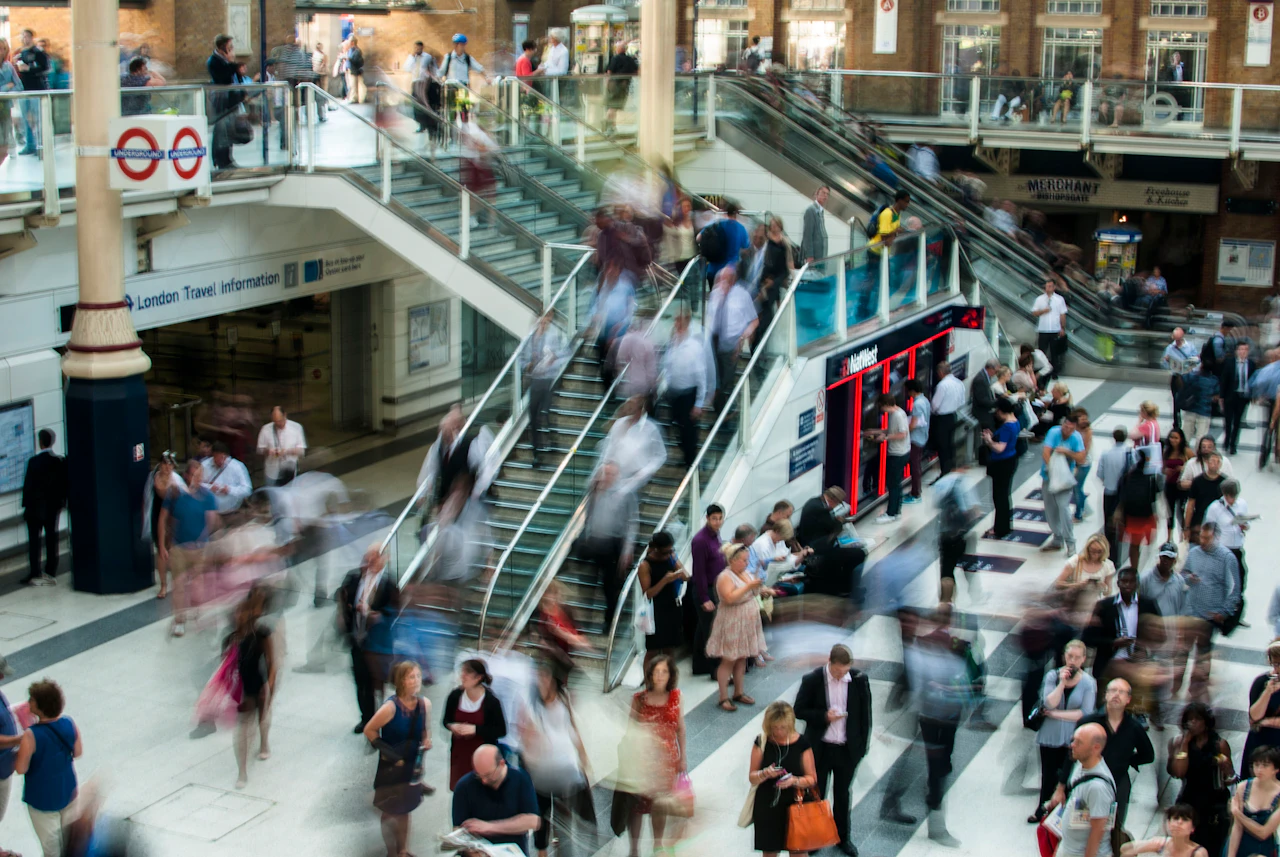
When a major storm hits a city, the first problem is obvious: flooded streets, downed signals, delayed trains, and packed buses. The second problem is less visible but often just as disruptive: the way a central bank’s rate signals and shifting inflation expectations can make the recovery from a weather shock slower, pricier, and more chaotic for commuters. That combination matters because urban travel does not fail in a single instant; it degrades through tighter supply, higher fares, fewer backup options, and more people making the same stressed decisions at once. If you travel to work, school, appointments, airports, or job sites in a dense city, understanding this chain reaction can help you plan with more resilience and fewer surprises.
This guide explains why commute disruptions become more severe after extreme weather, how monetary policy can amplify supply stress indirectly, and what practical commuter planning looks like when roads, transit, and prices all move against you. For broader storm planning and localized risk awareness, see our coverage on satellite intelligence for community risk management, when airspace becomes a risk, and whether to rebook or wait after a crisis. The core lesson is simple: weather knocks the system off balance, and financial tightening can reduce the system’s ability to absorb the blow.
Why Weather Shocks Turn Ordinary Commutes Into Systemwide Failures
Urban mobility has little slack
Big cities run on tightly timed systems. Transit agencies schedule vehicles to the minute, road networks rely on predictable traffic patterns, and delivery fleets depend on windows that assume normal conditions. Once heavy rain, snow, wind, heat, or flooding disrupts one part of the network, delays cascade into the rest of the day. That is why a one-hour storm can create three hours of commute pain.
For commuters, the practical effect is not just slower travel. It is missed transfers, overloaded platforms, longer waits for ride-hail vehicles, and backup routes that are already crowded. If you rely on multiple modes, the weakest link becomes the whole trip. For event planners and fans, similar crowd-flow lessons show up in our guide to staying safe at shows, where timing, exits, and congestion are often the difference between a manageable exit and a bottleneck.
Weather shocks damage supply, not just demand
After severe weather, commuters usually focus on what they can see: closed stations, fallen branches, stalled buses, and standing water. But weather also damages supply chains that support commuting. Fuel deliveries may slow, maintenance crews may be stretched, warehouse inventories can thin, and spare parts may take longer to arrive. These are supply-side stresses, and they matter because the transportation system is not just vehicles and tracks; it is labor, materials, and logistics.
This is where the commute pain begins to linger. A transit agency may restore service, but if staffing is tight or parts are backordered, headways remain irregular. A road may reopen, but if signal equipment or drainage systems are still damaged, delays persist. Similar “hidden infrastructure” thinking appears in our look at railroad fleet management and grid-aware systems, both of which show that resilience depends on maintenance capacity as much as on visible assets.
Peak commute chaos is a crowding problem
When a storm ends, everyone tends to move at once. Office workers return, school drop-offs resume, rideshare demand spikes, and people who delayed errands all re-enter the network together. That rebound creates peak commute chaos: the same number of available seats, cars, and drivers must absorb more concentrated demand than usual. Even if the weather improves quickly, the travel system may not.
This matters because congestion itself increases costs. Longer route times burn fuel, delivery windows slip, overtime rises, and passengers become more likely to pay surge pricing or accept less ideal options. In effect, the city’s mobility market becomes more expensive just as weather damage reduces efficient supply. That is why “the storm is over” does not mean “the commute is normal.”
How Central Bank Signals Can Intensify Commute Pain After Weather Events
Interest-rate signals shape recovery capacity
Central banks do not control the weather, but they influence how quickly businesses, agencies, and households can recover from weather disruptions. When policymakers signal higher rates or a tighter stance to fight inflation, borrowing costs rise. That can slow repairs, delay fleet replacement, reduce inventory buffers, and make it more expensive for operators to finance emergency work. In cities, those costs often show up as fewer spare buses, slower contractor mobilization, and thinner service cushions.
For commuters, the connection is indirect but real. A transit agency that cannot cheaply finance bridge work or vehicle replacement is more vulnerable to the next storm. A small logistics operator may delay adding backup vans or winter tires. A building owner may defer drainage upgrades or lobby for slower repairs. Over time, a tighter financial environment can mean a more fragile commute network.
Inflation expectations can change behavior before prices actually rise
Inflation expectations matter because people act on what they think will happen next. If workers, firms, and service providers expect higher prices, they often adjust quickly: contractors raise quotes, operators preserve cash, and households pull forward purchases or avoid discretionary trips. That can tighten supply even before actual inflation data moves. In a city recovering from weather damage, these expectations can accelerate shortages of labor, equipment, and transport capacity.
The Survey of Professional Forecasters is useful here because it tracks professional expectations for inflation, growth, and recession risk. When expectations remain elevated, businesses tend to behave defensively. For commuters, that means more expensive parking, more expensive rides, and slower restoration work after the storm. The issue is not that central bank policy causes bad weather; it is that policy and expectations can make the aftermath harder to absorb.
Supply stress shows up in the small details commuters notice first
Supply stress rarely announces itself with a headline. Instead, it appears as a bus that is suddenly less frequent, a temporary closure that lasts longer than expected, a surge fare that jumps faster than usual, or a station escalator that remains broken because replacement parts are delayed. These are classic signs that a city is running short on slack. In a healthy system, one layer absorbs the shock. Under supply stress, every layer becomes brittle.
That is why smart commuter planning should track more than weather alerts. You also want to watch transportation agency advisories, fare changes, and local economic signals that suggest tighter conditions. Our guide on covering market volatility offers a useful framework: avoid reacting to every signal, but do watch the indicators that change behavior ahead of visible disruption.
The Real-World Chain Reaction: From Storm to Supply Stress to Commute Disruption
Step 1: Extreme weather hits the city
Flooding, snow, ice, heat, or wind begins the chain. Roads clog, transit slows, and agencies deploy emergency procedures. Many travelers assume the main risk is the immediate interruption, but the more serious problem starts after the first 12 to 72 hours. That is when repairs begin, detours proliferate, and demand rebounds.
Step 2: Operators burn through reserve capacity
Transit agencies and commuting services often use spare vehicles, overtime, and temporary routing to stabilize service. But reserve capacity is finite. If the weather event is large enough or arrives repeatedly, those reserves get used up. If borrowing is expensive, replacing depleted capacity becomes slower. If inflation is expected to remain high, managers may hold back on nonessential spending. The result is a recovery that feels incomplete for days or weeks.
Step 3: Commuters compete for fewer reliable options
Once the public realizes service is still shaky, everyone shifts to the options that feel safest or fastest. That can overload the most reliable train line, the least flooded arterial road, or the one ride-hail corridor that still works. Prices rise, waits lengthen, and uncertainty increases. This is where resilience becomes personal: the most prepared commuter usually spends less time and money because they are not fighting the crowd at the last minute.
If flights are part of your commute pattern, especially for regional business travel, remember that weather and network stress can spill into aviation quickly. Our primer on AI and flight booking and mission-critical travel discipline both reinforce the same principle: the fewer assumptions you make about a smooth network, the better your contingency plan will be.
A Commuter’s Decision Framework for Storm Weeks and Tight Policy Periods
Know which trips are flexible and which are not
Not every trip deserves the same level of planning. A commute to an in-person meeting with no remote option is a fixed trip. A gym visit, grocery stop, or discretionary dinner is flexible. The smartest urban travelers classify trips before the weather hits so they can preserve scarce time and money for the journeys that matter most. That sounds basic, but it is one of the most effective resilience tools available.
Create a 3-bucket system: must travel, can shift time, and can cancel. During weather shocks and tight supply periods, aggressively downgrade the second and third buckets. This reduces exposure to congestion, surge pricing, and transit breakdowns. It also leaves more room for the trips that truly cannot move.
Build time buffers where the system is weakest
Buffers are not equal everywhere. A five-minute cushion may be enough on a stable subway line, but it is not enough if your route includes a flood-prone underpass, a bus transfer, and a walk through a construction zone. Your buffer should match the weakest segment of the trip, not the average condition. On bad-weather days, that often means leaving 20 to 40 minutes earlier than usual.
Think of your commute like an event timetable. The best operators do not just add slack randomly; they stage it where bottlenecks are most likely. That approach is similar to what you see in our breakdown of event-day logistics, where timing and flow control are the whole game. For commuters, the same logic applies to station access, transfer windows, and last-mile walking routes.
Keep a “weather plus economy” fallback plan
One backup plan is not enough. You need a weather fallback and a cost fallback. For example, if transit is delayed, can you bike or walk part of the route? If ride-hail prices surge, can you work from a safer location or shift your departure time? If parking becomes unavailable due to street closures, do you have a remote-work option or an alternate garage? These choices should be decided before the disruption starts.
A good fallback plan also considers fare and fuel inflation. If prices are climbing because supply is tight and expectations are elevated, some options become temporarily poor value even when they are technically available. Our travel budgeting pieces on avoiding airline add-on fees and beating baggage hikes show how much money can be saved by planning one step ahead.
What City Travelers Should Watch Before and After Severe Weather
Signals to monitor in the 48 hours before impact
Before the storm, watch for transit agency service advisories, flood warnings, wind advisories, and road closure alerts. Pair those with information on school schedules, office closure policies, and local event changes, because crowding patterns often shift before the weather arrives. If your city has recurring bottlenecks, such as tunnels, low-lying streets, or exposed bridges, those routes should be treated as likely fail points. The goal is not to predict every closure; it is to reduce surprise.
Also watch broader operational indicators. If delivery estimates start slipping, supplies may already be tightening. If your building’s maintenance staff is warning about drainage or power backup issues, your commute may be affected even if the roads are still open. For readers who want a broader resilience mindset, our article on upgrading safety systems as codes evolve is a useful reminder that preparedness is a process, not a purchase.
Signals to monitor in the 72 hours after impact
After the weather passes, the biggest mistake is assuming the city has fully recovered. Look at frequency data, not just service-restoration headlines. If trains run but arrive irregularly, or if buses are officially back but still crowding at every stop, the network is still under stress. That is the phase when commute disruptions often feel worst because expectations have normalized too quickly.
This is also when fare and pricing pressure can jump. If supply remains tight, rideshares, taxis, and parking may become more expensive. If your workplace or campus is not fully flexible, your total commuting cost can rise sharply even if the route is technically “open.” Keep an eye on local traffic, bridge restrictions, and transit alerts before assuming normal timing has returned.
Signals that point to deeper supply stress
When weather damage runs into a tight financial environment, you may notice longer repair timelines, recurring equipment failures, and thin staffing. That is the deeper story behind commute pain: less cushion in the system. If the city is also dealing with general inflation pressure, agencies and vendors may delay work that is not immediately visible to the public. Travelers feel this as a pattern of “almost normal” service that never fully stabilizes.
Pro Tip: On storm weeks, judge your commute by the weakest 20% of the route, not the average. One flooded intersection, one delayed feeder bus, or one crowded transfer can determine whether you arrive on time.
Comparison Table: How Different Disruption Types Affect Urban Travel
| Disruption type | Immediate effect | Supply stress channel | Best commuter response |
|---|---|---|---|
| Heavy rain and flooding | Road closures, slow buses, station access issues | Drainage repairs, vehicle rerouting, longer restoration times | Shift departure earlier and avoid low-lying routes |
| Snow and ice | Slower traffic, transit delays, slips and falls | Salt, staffing, and equipment shortages | Use layered routing and build a larger time buffer |
| Extreme heat | Strained rails, overwhelmed riders, higher fatigue | Maintenance load, power demand, reduced labor capacity | Travel earlier or later in the day and hydrate |
| Wind and storms | Downed lines, service suspensions, debris | Repair crews, parts, and system inspections | Track service alerts and keep a multimodal backup |
| Tight monetary conditions with inflation pressure | Higher fares and slower recovery spending | Reduced financing flexibility for repairs and buffers | Budget for surge pricing and reserve a non-price-based backup |
Practical Commute Strategies for Urban Travelers
Use multimodal redundancy, not a single heroic option
Resilient commuters do not depend on one perfect mode. They know the walking path, the bus alternative, the subway backup, and the ride-hail escape hatch. That does not mean carrying four plans everywhere. It means understanding which combination works best under normal, wet, or disrupted conditions. If you need help thinking through mixed-mode options during major disruption, our guide to multimodal recovery when flights are canceled translates well to city travel.
For example, if your train line becomes unreliable after a storm, you may be better off riding one stop less and walking through a dry corridor than waiting for a delayed connection. If the bus is still running but crowded, shifting your departure by 30 minutes can be more effective than paying for a surge ride. The point is to preserve control, not convenience at any cost.
Optimize for reliability, not just speed
In stable conditions, fastest usually wins. In disrupted conditions, most reliable wins. A route that is 10 minutes slower but far less exposed to flooding, signal failures, or crowding is often the better choice after severe weather. Reliability also reduces stress, which matters because decision fatigue is a real cost during uncertain commutes. The fewer times you have to improvise, the better your day tends to go.
Use this mindset when choosing between a direct but fragile option and a slightly longer but sturdier one. If your workplace allows flexible arrival windows, prioritize consistency over perfection. If not, consider leaving earlier enough that the slower route still gets you there on time.
Treat price spikes as a warning signal
When ride prices climb, parking fills up, or delivery fees rise quickly, that is often a sign the system is under stress. Do not assume the price is only a financial issue. It may also be a signal that demand has concentrated around a reduced pool of available supply. In that environment, buying convenience last-minute is usually the most expensive choice you can make.
This is where inflation expectations become practical. If the market expects higher costs, those costs can appear faster and stay higher longer. To manage that, keep a commuting reserve fund for weather weeks, and define in advance when you will pay extra versus when you will switch to a backup plan. That helps prevent rushed, emotionally driven decisions.
Planning by Traveler Type: Workers, Students, Freelancers, and Frequent Flyers
Office commuters
If you commute to a fixed workplace, your resilience plan should focus on arrival certainty. That means knowing the earliest service option, the least flood-prone route, and the best indoor waiting spot if you arrive early. It also means coordinating with your manager before disruption hits if remote work or staggered arrival is possible. The best office commuters treat weather as a scheduling variable, not a surprise.
Students and campus travelers
Students often have the least flexibility and the tightest budgets, which makes them especially vulnerable to weather plus price stress. Build a campus-safe route, identify shelter points, and keep an eye on transit passes and temporary closures. If you are trying to plan money around transportation and utilities, our explainer on student budgeting surprises offers a helpful financial discipline framework. The same “buffer first” mindset applies to commute planning.
Freelancers and hybrid workers
Hybrid workers have a hidden advantage: they can often choose the least painful travel window. Use that advantage aggressively. If the forecast and transit alerts look rough, shift your commute earlier or later, work from home, or combine errands into one trip. Freelancers should also treat weather weeks as cash-flow weeks, because canceled rides, delayed meetings, and short-notice lodging can quickly change the economics of a project day.
For teams thinking about more advanced adaptability, our piece on AI-powered upskilling is a reminder that preparedness can be learned and standardized, not left to individual improvisation. A good commute plan is a teachable system.
What Good Commuter Resilience Looks Like in Practice
It starts before the forecast is dramatic
The strongest urban travelers do not wait for emergency headlines. They monitor the forecast, understand local weak points, and update their plans when the first signs of strain appear. They know that a little friction before a storm often becomes major friction after one. That early action prevents the rushed choices that make commute chaos so expensive.
It balances money, time, and safety
Resilience is not just about getting there. It is about choosing the least damaging option across time, cost, and safety. Sometimes that means paying slightly more for a reliable route; other times it means waiting out surge pricing or moving the trip to another day. Good commuter planning accepts tradeoffs openly instead of pretending there is always a free, fast, and safe option.
It respects how systems actually fail
Urban systems usually fail through bottlenecks, not total collapse. One station closure, one washed-out road, one service gap, or one delayed repair can ripple far beyond the original site. The more you understand those weak links, the easier it is to stay ahead of them. That is the core of commuter resilience: not predicting everything, but preparing for the most likely points of failure.
Key Stat: In stressed commute systems, the last mile often becomes the most expensive mile, because it is where delays, crowding, and surge pricing converge.
Bottom Line: Weather Worsens Commutes, But Policy Can Shape the Recovery
Extreme weather creates the obvious commute disruption, but the harder problem is how the recovery unfolds. If central bank signals tighten financial conditions and inflation expectations stay elevated, the city’s transportation supply can recover more slowly, at higher cost, and with less spare capacity. That makes the ordinary commute more fragile and the post-storm commute far more painful. Understanding that connection helps urban travelers make better decisions before the bottlenecks hit.
Use your forecast, your transit alerts, and your own budget as one integrated plan. Watch the weather, watch the supply signals, and keep a disciplined fallback strategy ready. For additional resilience planning, revisit our guides on community risk mapping, airspace disruptions, and trip rebooking strategy. The commuters who do best are rarely the luckiest; they are the ones who assume the system will be stressed and plan accordingly.
Related Reading
- Satellite Intelligence for Community Risk Management: Wildfire and Flood Preparedness for Co-ops - Learn how remote sensing can sharpen local hazard awareness.
- Artemis II Reentry: What Air Travelers Can Learn from a Mission That Cannot Fail - A high-stakes planning mindset for time-sensitive travel.
- Last-Minute Roadmap: Multimodal Options to Reach Major Events When Flights Are Canceled - A practical model for backup routing.
- Covering Market Volatility Without Becoming a Broken News Wire: SEO Strategies for Commodity Spikes - Useful thinking for interpreting fast-changing signals.
- Upgrade Roadmap: Which Smoke and CO Alarms to Buy as Codes and Tech Evolve (2026–2035) - A structured way to think about staged preparedness.
FAQ: Central bank moves, weather, and commute disruptions
1) How can central bank policy affect my commute if it has nothing to do with weather?
It affects the recovery environment. Higher rates and tighter financial conditions can make repairs, staffing, equipment replacement, and service expansion more expensive after a storm. That can leave transit and road networks with less slack right when they need it most.
2) Why do inflation expectations matter for urban travel?
Because expectations change behavior. If contractors, operators, and households expect higher costs, they may raise prices, delay spending, or reduce backup capacity. That makes post-storm commute options scarcer and more expensive even before official inflation data shifts.
3) What should I watch first after a major weather event?
Look at transit frequency, road reopenings, and local crowding patterns, not just whether service is technically back. A route can be open and still be unreliable, crowded, or expensive.
4) Is ride-hail always the best backup during commute chaos?
No. Ride-hail is often the most visible backup, but it is also one of the first options to spike in price during congestion. Sometimes a slightly earlier departure, a partial walk, or a different transit line is cheaper and more reliable.
5) What is the single best commuter planning habit for storm weeks?
Decide your backup before the storm arrives. If you wait until the network is already stressed, you will likely pay more, wait longer, and have fewer good choices.


